The Protected Failure: Lloyd Fredendall, Kasserine Pass, and Why Our Military Personnel System is Stuck in Second Generation Warfare

I’ve spent decades studying military leadership, personnel systems, and how armies adapt—or fail to adapt—to the changing nature of war. From my time teaching at Georgetown University to advising on Army reforms, one thing has become crystal clear: an outdated personnel system that rewards conformity, seniority, and political connections over competence and adaptability will doom us in modern conflict.
The story of Major General Lloyd Fredendall at Kasserine Pass in 1943 is a stark warning from history that we still haven’t fully heeded.
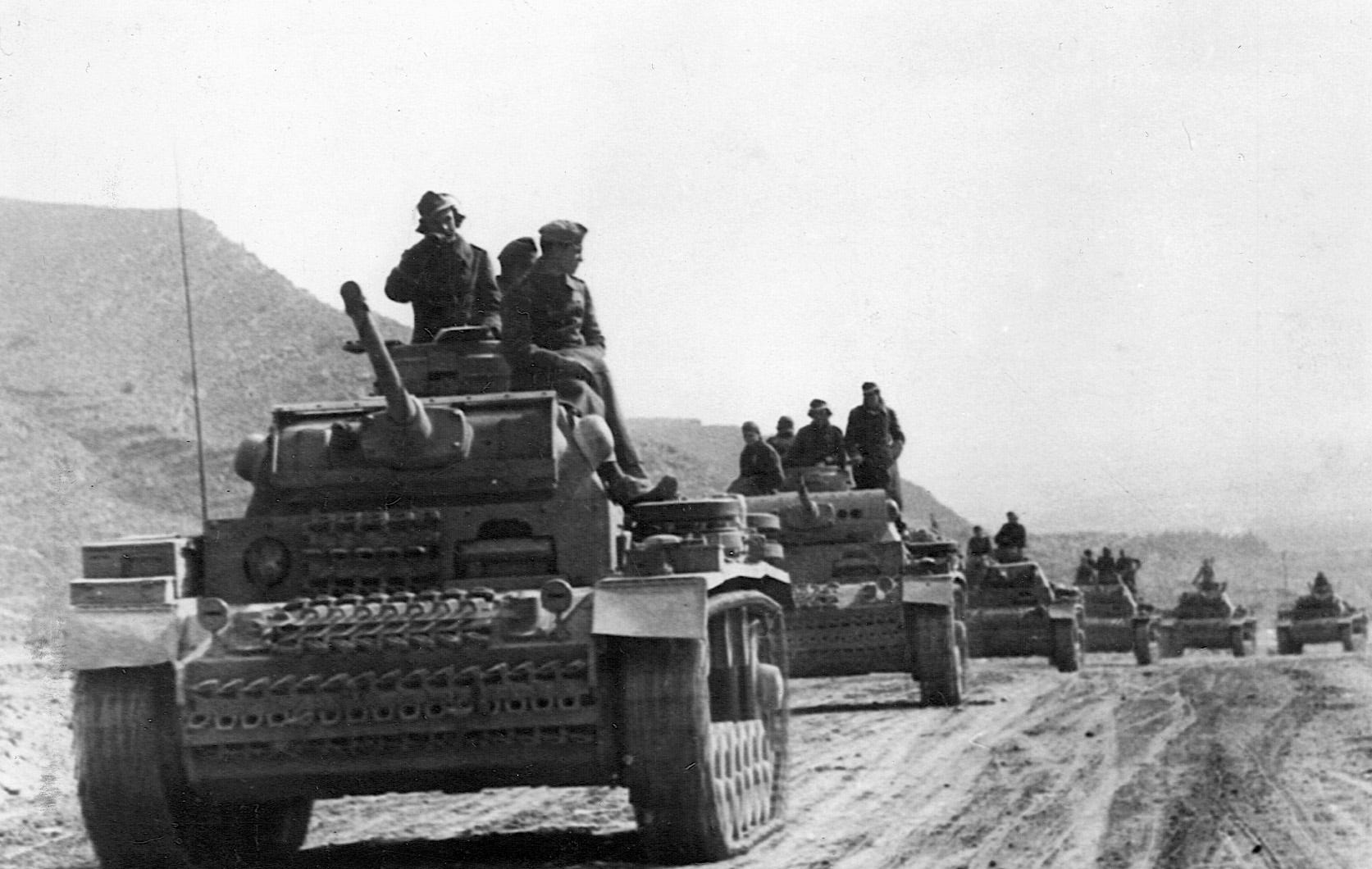
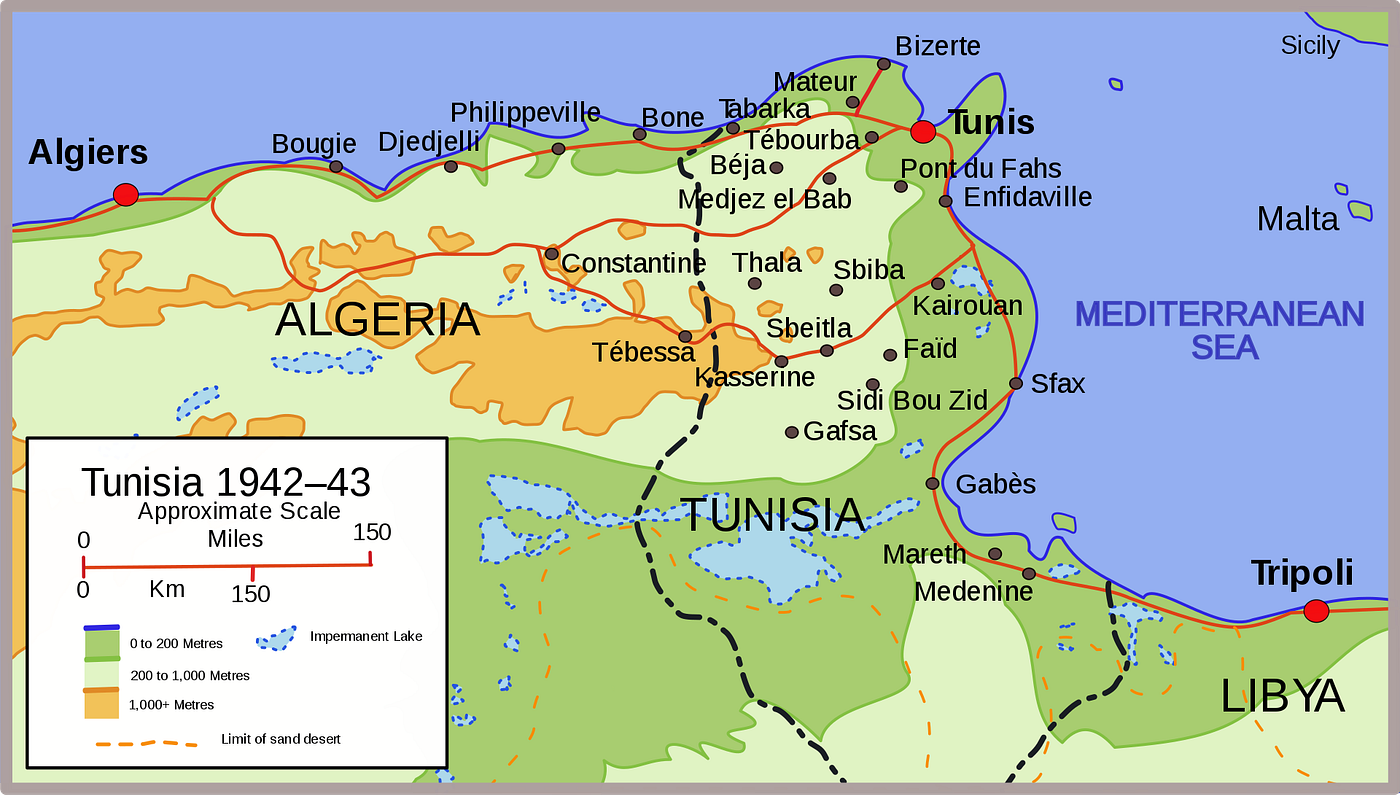
On March 5, 1943, Dwight D. Eisenhower relieved Fredendall of command of II Corps after the disastrous Battle of Kasserine Pass. American forces suffered thousands of casualties, units routed in panic, and the Germans under Rommel exploited our inexperience and poor leadership to humiliating effect.
Fredendall’s command post was dug deep into a ravine 80-100 miles behind the lines—a fortified bunker complete with engineering priorities diverted from combat needs—while his soldiers fought and died on the front.
Subordinates like Major General Ernest Harmon called him a “physical and moral coward.” Omar Bradley, Patton, and others echoed the sentiment: Fredendall micromanaged from afar, issued confusing orders in his own slang-filled jargon, scattered units too thinly for mutual support, and ignored frontline advice.
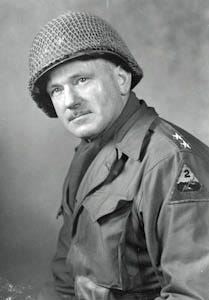
Yet, astonishingly, just months later in June 1943, Fredendall was promoted to Lieutenant General and sent stateside to command Second Army in training roles. He was greeted as a hero, no court-martial, no public reckoning.
Why? Chief of Staff George C. Marshall, who had personally championed Fredendall as “one of the best,” chose to protect him. Early in the war, with American morale fragile after our first major ground defeat, Marshall calculated that a high-profile sacking and investigation risked Congressional scrutiny and public backlash.
Fredendall’s early connections—his Wyoming roots and ties through Senator Francis E. Warren (a powerful figure and father-in-law to John J. Pershing)—may have played a role in his initial rise, though the post-Kasserine protection seems more about avoiding embarrassment for Marshall’s own endorsements.
Meanwhile, competent subordinates paid the price. Major General Orlando Ward, commander of the 1st Armored Division, was relieved by Patton shortly after for perceived caution—despite fighting under Fredendall’s disastrous dispersal orders. Ward followed directives, yet bore the blame while the senior leader advanced.
This is classic Second Generation Warfare thinking embedded in our personnel system. Second Generation Warfare (2GW), as conceptualized by William S. Lind and others, emphasizes centralized control, top-down orders, attrition through firepower, and inward-focused bureaucracy. Fredendall exemplified this culture.
The industrial-age U.S. military personnel system—born in the early 20th century and refined post-WWII—prioritizes process over results: up-or-out promotion, rigid time-in-grade requirements, centralized selection boards, and a culture that punishes risk while rewarding ticket-punching and avoiding mistakes.
In 2GW, failure at the top is often covered up to preserve the system. Accountability flows downward—subordinates are scapegoated—while elites are protected to maintain institutional cohesion and political support.
Fredendall’s promotion exemplifies this: protect the hierarchy, avoid scrutiny, and soldiers pay in blood.
But warfare has evolved. We need a Third Generation Warfare (3GW) culture—maneuver warfare, decentralized decision-making (Auftragstaktik or mission command), speed, initiative at lower levels, and adaptability. A 3GW personnel system would select and promote leaders based on proven battlefield competence, encourage calculated risk, reward innovation, and swiftly remove failures regardless of rank or connections.
To succeed in Fourth Generation Warfare (4GW)—where distinctions blur between war and peace, combatants and civilians, and enemies use asymmetry, information operations, drones, and non-state networks—we must fully embrace 3GW principles.
4GW demands leaders who think independently, build trust-based units, and adapt faster than centralized bureaucracies allow. Yet our current system, still rooted in 2GW, stifles exactly that: it promotes conformists, discourages dissent, and protects failures if they’re “one of us.”
If we continue shielding elites after dismal failures—like Fredendall’s—we will never build the adaptive, mission-command culture required for future wars. History shows the cost: at Kasserine, young Americans died while a failed general advanced. Today, in an era of peer competitors and irregular threats, we can’t afford that luxury.
Reform the personnel system now: decentralize selections, emphasize outcomes over inputs, foster free-thinking leaders, and enforce real accountability from the top down.
The principle of accountability applies equally—no one is above the law—but the military often handles senior leader failures administratively to avoid public trials, while lower ranks face more immediate disciplinary action for property issues.
If a Soldier or Marine can be court martialed for losing a weapon or night vision goggles, then a General can also be demoted and kicked out for battlefield failure.
Only then can we win the wars of tomorrow.
Endnotes
U.S. Army, II Corps After Action Reports, Kasserine Pass, February 1943, Records of the Adjutant General’s Office, Record Group 407, National Archives and Records Administration, College Park, MD.
George C. Marshall, interviews and reminiscences with Forrest C. Pogue, transcribed in George C. Marshall: Interviews and Reminiscences for Forrest C. Pogue, ed. Larry I. Bland (Lexington, VA: George C. Marshall Foundation, 1991).
Forrest C. Pogue, George C. Marshall: Ordeal and Hope, 1939–1942 (New York: Viking Press, 1966); and George C. Marshall: Organizer of Victory, 1943–1945 (New York: Viking Press, 1973).
Martin Blumenson, ed., The Patton Papers: 1940–1945 (Boston: Houghton Mifflin, 1974).
Dwight D. Eisenhower, Crusade in Europe (Garden City, NY: Doubleday, 1948).
Rick Atkinson, An Army at Dawn: The War in North Africa, 1942–1943 (New York: Henry Holt, 2002).
Carlo D’Este, Patton: A Genius for War (New York: HarperCollins, 1995).
George F. Howe, Northwest Africa: Seizing the Initiative in the West, United States Army in World War II: Mediterranean Theater of Operations (Washington, DC: U.S. Army Center of Military History, 1957).
Russell A. Gugeler, “Major General Orlando Ward: Life of a Leader” (Bangor, ME: Red Anvil Press, 2008).
“Why Patton’s Predecessor Was Promoted – The Scandal That Outraged the Army,” documentary video, directed by unknown (YouTube, 2025),
.
if only…one day…maybe….🤞…🙏
I think less and less of our Generals the more I learn.
I’m already not impressed by Marshall, I’ll give the man his due , no more.