Operation Midnight Hammer: A Modern Echo of Operation Focus
Operation Midnight Hammer parallels Israel's 1967 air operation, Operation Focus (Moked) exemplifies a military scenario where centralized planning and synchronization are better than MIssion Command.

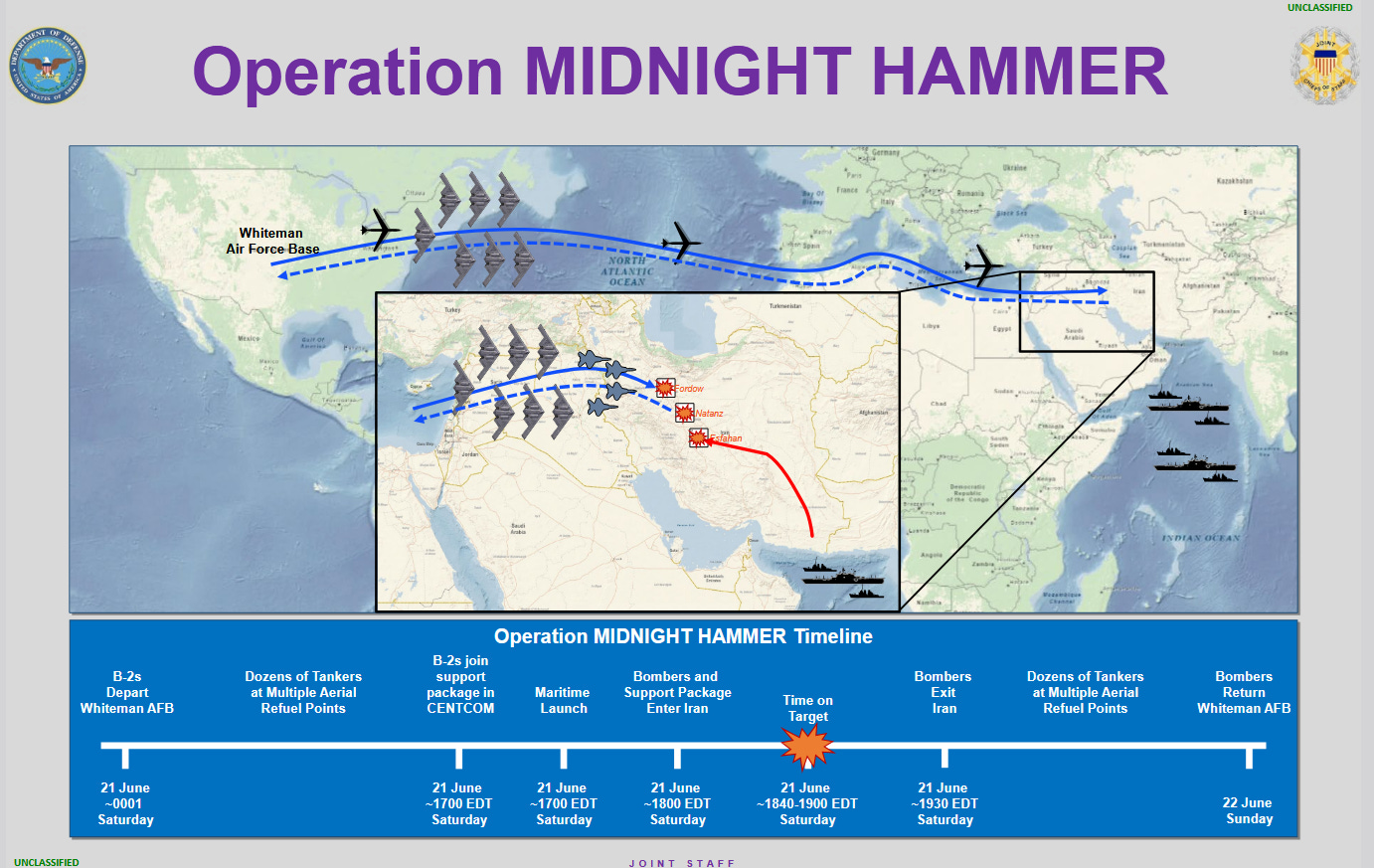
On June 21–22, 2025, the United States executed Operation Midnight Hammer, a series of precision airstrikes targeting Iran’s nuclear facilities at Fordow, Natanz, and Isfahan. This operation, much like the Israeli Air Force’s Operation Focus (Moked) during the Six-Day War in 1967, exemplifies a military scenario where centralized planning and synchronization trump the decentralized flexibility of Mission Command. Both operations required meticulous coordination, precise timing, and rigid adherence to a pre-set plan to achieve strategic surprise and decisive impact. This article analyzes Operation Midnight Hammer through the lens of Operation Focus, highlighting parallels in their reliance on centralized control and the temporary suspension of Mission Command principles to ensure success.
The Strategic Context of Operation Midnight Hammer
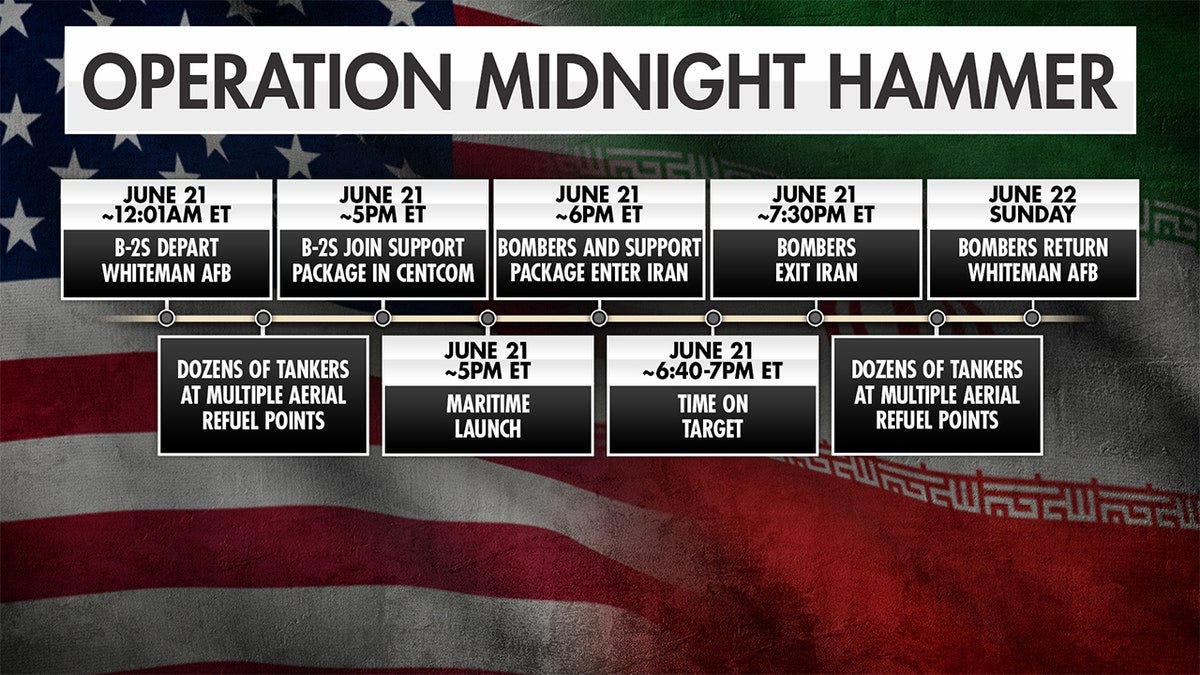
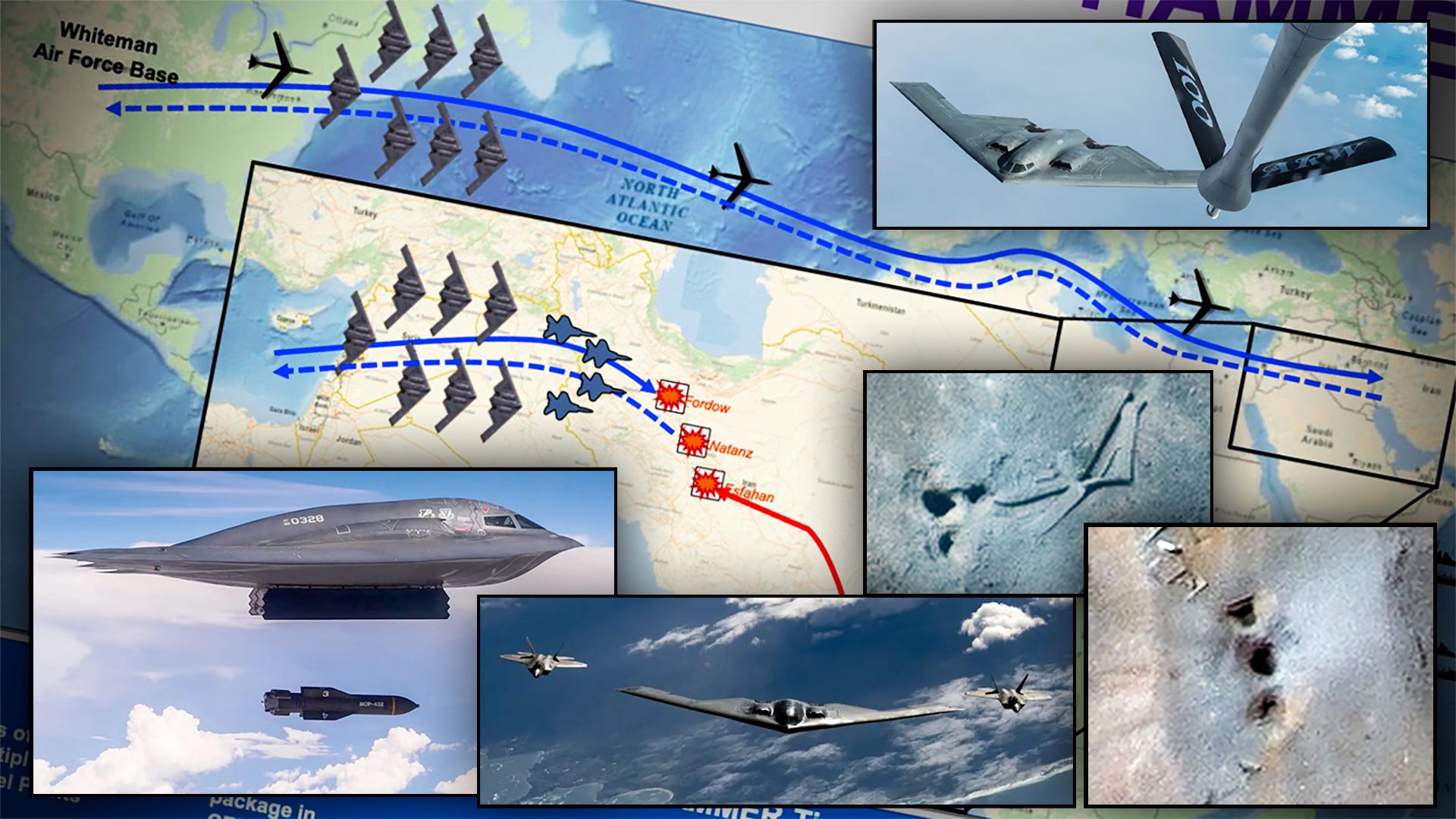
Operation Midnight Hammer was a bold escalation in the ongoing Israel-Iran conflict, with the U.S. joining Israel’s campaign to neutralize Iran’s nuclear capabilities. The operation involved over 125 U.S. military aircraft, including seven B-2 Spirit stealth bombers, and the deployment of 14 GBU-57 Massive Ordnance Penetrator (MOP) “bunker buster” bombs and over 24 Tomahawk cruise missiles. The targets—Fordow, Natanz, and Isfahan—are critical nodes in Iran’s nuclear program, with Fordow’s deeply buried enrichment facility posing a particular challenge due to its fortification beneath a mountain.
President Donald Trump announced the strikes as a “very successful attack,” claiming Iran’s nuclear program was “completely and fully obliterated.” However, U.S. officials cautioned that damage assessments were ongoing, and Iranian sources disputed the extent of the destruction, particularly at Fordow. The operation’s stated objective was to destroy Iran’s nuclear enrichment capacity, preventing the development of nuclear weapons, which both the U.S. and Israel view as an existential threat.
Parallels with Operation Focus
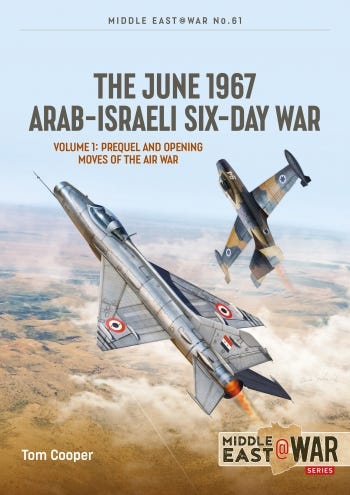
Operation Focus, launched at 07:45 AM on June 5, 1967, was a preemptive strike by the Israeli Air Force that crippled the air forces of Egypt, Syria, Jordan, and Iraq. It relied on surprise, coordination, and timing to destroy enemy aircraft on the ground before they could respond. Operation Midnight Hammer mirrors these principles in several key ways:
Surprise as the Cornerstone
Operation Focus: The Israeli strikes targeted 18 Egyptian airfields in the first wave, catching planes on the ground during early morning hours when pilots were least alert and radar coverage was minimal. The near-simultaneous strikes prevented Arab forces from scrambling fighters or mounting defenses.
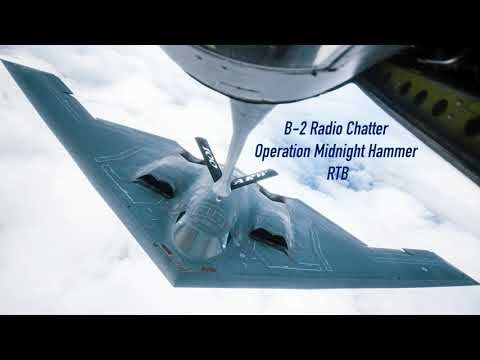
Operation Midnight Hammer: The U.S. achieved surprise through stealth and deception. B-2 bombers flew an 18-hour mission from Whiteman Air Force Base, Missouri, using decoy maneuvers and cyber fakes to avoid detection. The strikes began at approximately 2:10 AM local Iranian time, exploiting a window of minimal alertness. The operation faced no Iranian fighter aircraft or surface-to-air missile threats, underscoring the element of surprise.
Centralized Coordination and Synchronization
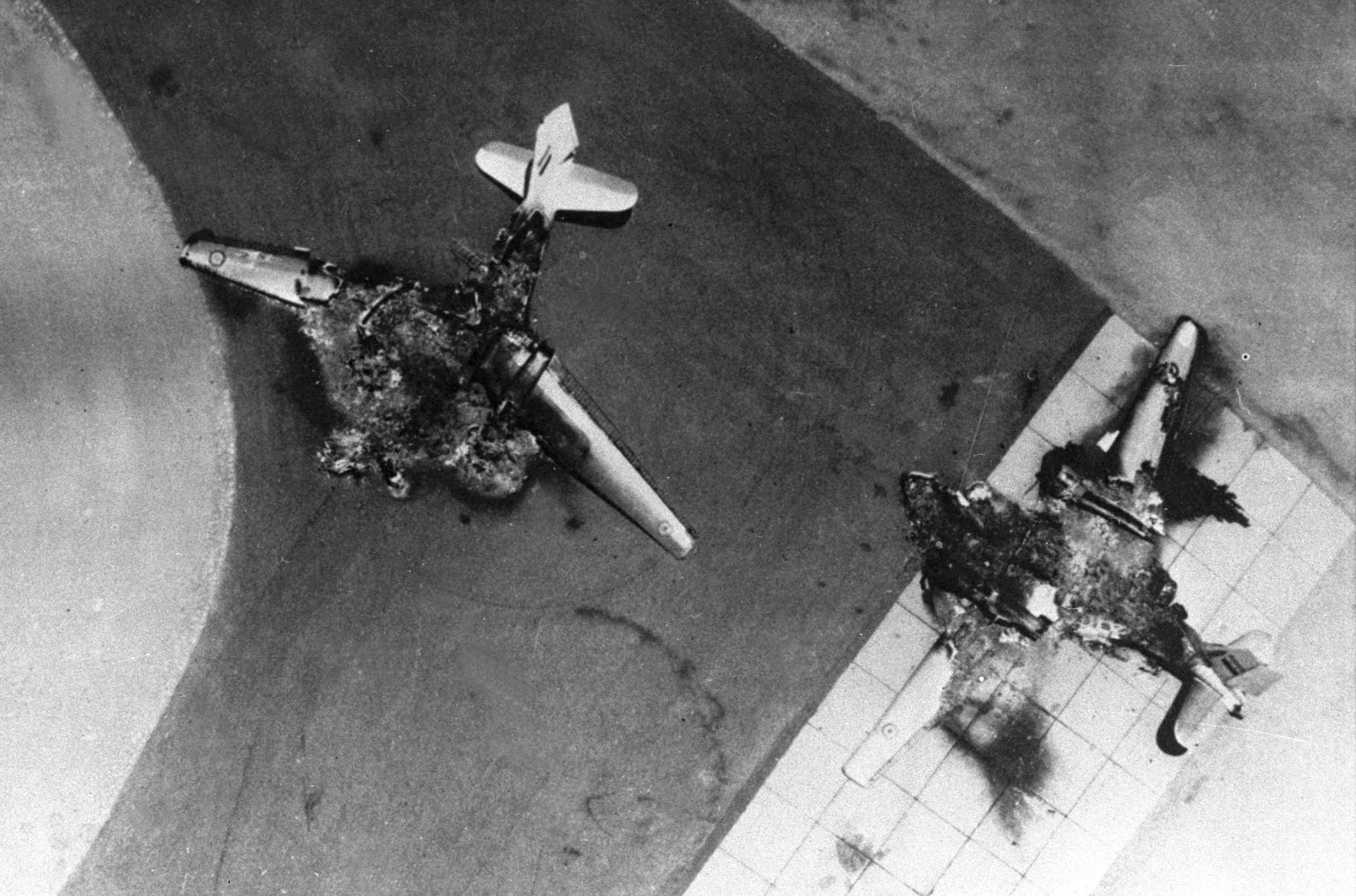
Operation Focus: Over 250 Israeli aircraft, including fighters, bombers, and support craft, hit multiple airfields across several countries in a tightly choreographed sequence. Pilots followed strict flight paths, flew low to avoid radar, and adhered to precise strike times—down to the minute. Deviation was not an option, as any desynchronization could alert Arab defenses.
Operation Midnight Hammer: The operation was described as the “largest B-2 strike in U.S. history,” involving 125 aircraft and precise coordination across multiple branches of the U.S. military. The B-2 bombers struck Fordow and Natanz with MOP bombs within a 25-minute window, while Tomahawk missiles from an Ohio-class submarine hit Isfahan. This required exact synchronization, with the Pentagon releasing a detailed timeline showing the operation’s “immaculate” planning.
Suppression of Mission Command
Operation Focus: Mission Command, which emphasizes decentralized execution and subordinate initiative, was deliberately sidelined. The operation’s complexity—multiple targets across different countries—and the need for surprise left no room for improvisation. Squadron leaders had minimal leeway to adapt, as any deviation risked alerting the enemy or disrupting the broader plan.
Operation Midnight Hammer: Similarly, Operation Midnight Hammer demanded rigid adherence to a centralized plan. The use of decoys, cyber fakes, and a tightly controlled flight path for the B-2 bombers required precise execution. The final decision to strike was made by President Trump aboard Air Force One, with Defense Secretary Pete Hegseth advising a go-or-abort call, indicating a top-down command structure. Pilots and crews had little room to deviate, as the operation’s success hinged on hitting all three sites in a narrow time frame to prevent Iranian retaliation or defensive measures.
Resource Optimization
Operation Focus: Israel’s air force, though highly capable, was outnumbered by the combined Arab air forces. The plan maximized efficiency by destroying enemy aircraft on the ground, avoiding prolonged engagements where numerical inferiority could be a disadvantage.
Operation Midnight Hammer: The U.S. leveraged its technological superiority, particularly the B-2’s ability to carry MOP bombs capable of penetrating Fordow’s fortifications. The operation avoided direct engagement with Iranian forces, focusing on precision strikes to neutralize key facilities without risking prolonged conflict. This efficiency was critical, given the high stakes and potential for regional escalation.
Why Mission Command Was Infeasible
Both operations illustrate scenarios where Mission Command’s decentralized approach was impractical due to the need for absolute synchronization and surprise. In Operation Midnight Hammer, several factors necessitated centralized control:
Risk of Desynchronization: If one strike had occurred early or late, Iran could have activated air defenses or scrambled fighters, compromising the entire operation. The 25-minute window for the B-2 strikes on Fordow and Natanz underscores this precision.
Complexity of Targets: The three nuclear facilities were geographically dispersed and heavily fortified, particularly Fordow. Coordinating strikes across these sites required a unified plan to prevent any single target from alerting others.
Strategic Stakes: The operation aimed to eliminate Iran’s nuclear threat, a goal with global implications. Failure to achieve decisive results could have emboldened Iran or triggered retaliatory strikes, as warned by Iranian Foreign Minister Abbas Araghchi, who said Iran “reserves all options.”
Operational Secrecy: The use of decoys and cyber fakes to mask the operation’s approach required centralized oversight to ensure all elements aligned seamlessly.
As with Operation Focus, Mission Command principles were not entirely absent. Once the initial strikes were completed, U.S. forces remained on high alert, postured to respond to Iranian retaliation or proxy attacks, suggesting a potential shift to more flexible operations. This mirrors how Israel transitioned to decentralized methods after Operation Focus neutralized Arab air power, allowing ground and air units to exploit the resulting chaos.
Outcomes and Implications
Operation Focus achieved near-total destruction of Arab air forces, enabling Israel to dominate the Six-Day War. Operation Midnight Hammer’s outcomes are less clear. While President Trump claimed the nuclear sites were “obliterated,” U.S. officials noted that damage assessments were ongoing, and Iranian sources claimed minimal impact at Fordow. Satellite imagery showed some damage, but the extent remains uncertain. The International Atomic Energy Agency reported no off-site radiation, indicating the strikes avoided nuclear material.
The operation has heightened regional tensions, with Russia, China, and Pakistan calling for a U.N. ceasefire resolution and Iran vowing retaliation. Protests in Tehran and air raid sirens in Israel signal ongoing volatility. Critics, including Senator Bernie Sanders, have drawn parallels to the 2003 Iraq invasion, warning of unintended consequences.
What Does This All Mean?
A professional organization, whether military or civilian, must select an appropriate command and control system to achieve its objectives. A culture rooted in Mission Command, or Auftragstaktik, provides a strong foundation, enabling professionals to adapt across various command environments. Transitioning from Mission Command to Directive Control or Top-Down Command is generally smoother than the reverse.
During the Prussian campaigns of 1866 and 1870, the Prussian/German forces employed two distinct command approaches. Mobilization and rail movements required strict synchronization and centralized control. However, once forces were deployed, Helmuth von Moltke, the Prussian Chief of Staff, shifted to Auftragstaktik, empowering subordinate commanders to make decisions in dynamic battlefield conditions.
Operations like Operation Focus (1967) and Operation Midnight Hammer (2025) illustrate scenarios where military objectives demand centralized control over the flexibility of Mission Command. Both operations prioritized surprise, precise timing, and coordinated execution to achieve strategic goals—neutralizing enemy air power in 1967 and targeting Iran’s nuclear program in 2025. These high-stakes, complex missions required meticulous, top-down planning to ensure success.
While Mission Command thrives in fluid, unpredictable environments, certain operations necessitate rigid synchronization. Operation Midnight Hammer highlights the continued relevance of centralized control in modern warfare, particularly for achieving decisive strategic outcomes. However, as the world awaits Iran’s response, the operation also prompts questions about the long-term implications of such bold, centralized actions.
A culture of Mission Command equips organizations to operate effectively across command systems, with the flexibility to adopt Directive Control when required. Historical and modern examples underscore the need for adaptability in balancing centralized synchronization with decentralized decision-making to meet diverse operational demands.
Notes:
Al Jazeera. “US Bombs Iran’s Nuclear Sites: What We Know So Far.” Al Jazeera, June 22, 2025. https://www.aljazeera.com/news/2025/6/22/us-bombs-irans-nuclear-sites-what-we-know-so-far.
BBC News. “What We Know about US Air Strikes on Three Iranian Nuclear Sites.” BBC News, June 22, 2025. https://www.bbc.com/news/articles/c8xe4y7p1jlo.
Breaking Defense. “Operation Midnight Hammer: How the US Conducted Surprise Strikes on Iran.” Breaking Defense, June 22, 2025. https://breakingdefense.com/2025/06/operation-midnight-hammer-how-the-us-conducted-surprise-strikes-on-iran/.
CBS News. “Pentagon Reveals How B-2 Bombers Struck Iran Nuclear Sites in Mission Dubbed ‘Operation Midnight Hammer.’” CBS News, June 22, 2025. https://www.cbsnews.com/news/operation-midnight-hammer-b2-bombers-iran-nuclear-sites/.
CNN. “How Badly Have US Strikes Damaged Iran’s Nuclear Facilities? Here’s What to Know.” CNN, June 22, 2025. https://www.cnn.com/2025/06/22/middleeast/iran-nuclear-facilities-us-strikes-damage-explainer.
Council on Foreign Relations. “U.S., Israel Attack Iranian Nuclear Targets—The Damage So Far.” Council on Foreign Relations, June 22, 2025. https://www.cfr.org/article/us-israel-attack-iranian-nuclear-targets-damage-so-far.
Daily Mail. “White House Says Trump Was ‘the First President with the Guts to Do Something’ about Iran.” Daily Mail, June 22, 2025. https://www.dailymail.co.uk/news/article-13554678/White-House-Trump-Iran-nuclear-strikes.html.
The Guardian. “Iran Says US ‘Must Receive a Response’ after Trump’s Strikes on Nuclear Sites.” The Guardian, June 22, 2025. https://www.theguardian.com/world/2025/jun/22/iran-says-us-must-receive-response-after-trumps-strikes-on-nuclear-sites.
Institute for the Study of War. “Iran Update Special Edition: Israeli Strikes on Iran, June 13, 2025.” Understanding War, June 12, 2025. https://www.understandingwar.org/backgrounder/iran-update-special-edition-israeli-strikes-iran-june-13-2025.
NBC News. “Iran Vows Retaliation after U.S. Strikes on Nuclear Sites; Trump Claims Success.” NBC News, June 22, 2025. https://www.nbcnews.com/news/world/iran-vows-retaliation-us-strikes-nuclear-sites-trump-claims-success-rcna161234.
The New York Times. “A Long Way Down: What It Takes to Hit Iran’s Deepest Nuclear Site.” The New York Times, June 20, 2025. https://www.nytimes.com/2025/06/20/world/middleeast/iran-nuclear-site-fordo-us-bunker-buster.html.
The New York Times. “Israel and Iran Trade New Rounds of Attacks.” The New York Times, June 22, 2025. https://www.nytimes.com/2025/06/22/world/middleeast/israel-iran-attacks.html.
NPR. “Satellites Show Damage to Iran’s Nuclear Program, but Experts Say It’s Not Destroyed.” NPR, June 22, 2025. https://www.npr.org/2025/06/22/nx-s1-5012345/iran-nuclear-program-us-strikes-damage.
Oren, Michael B. Six Days of War: June 1967 and the Making of the Modern Middle East. New York: Oxford University Press, 2002.
Wikipedia. “United States Strikes on Iranian Nuclear Sites.” Wikipedia, June 22, 2025. https://en.wikipedia.org/wiki/United_States_strikes_on_Iranian_nuclear_sites.