Fourth Generation Warfare Analysis: Strategic Alternatives to Ground Troops in Iran
The US and NATO must avoid putting troops on the ground at all costs in the current Iranian vs Israeli/US War. Instead there are several better options in the context of the Generations of War.

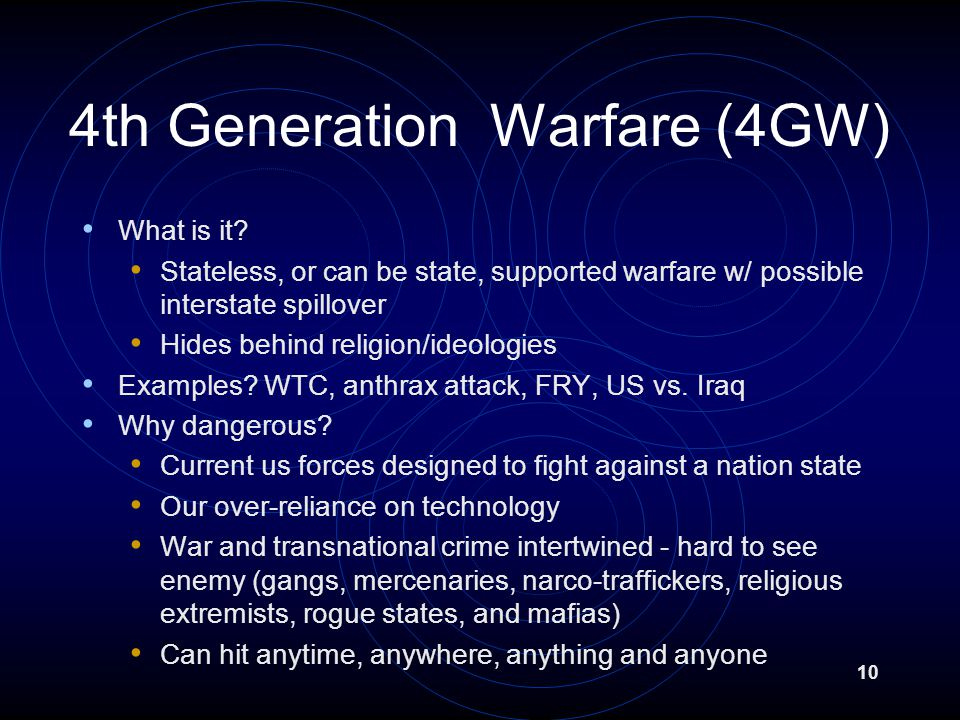
Fourth Generation Warfare (4GW) emphasizes decentralized, non-state actors, psychological operations, and leveraging societal dynamics to achieve strategic objectives without conventional military engagements. In the context of escalating tensions with Iran, as of June 23, 2025, the United States and Israel are conducting a bombing campaign targeting Iranian nuclear and military infrastructure. This article analyzes how the U.S. and its allies can avoid deploying ground troops, learning from past failures in regime change and nation-building, while utilizing advanced technologies, elite covert forces, and internal Iranian discontent to destabilize the current regime.
The Pitfalls of Ground Troops and Nation-Building
Previous U.S.-led interventions in Iraq and Afghanistan highlight the risks of ground troop deployments and nation-building in complex socio-political environments. These operations, rooted in Second and Third Generation Warfare, relied on overwhelming military force and centralized control, often ignoring cultural and societal nuances. In Iraq, the 2003 invasion led to prolonged insurgency, sectarian violence, and a power vacuum that fueled groups like ISIS. Similarly, Afghanistan’s 20-year occupation failed to establish a stable government, costing trillions and thousands of lives.
Deploying U.S. or NATO troops in Iran would likely repeat these failures. Iran’s terrain, larger population (over 80 million), and strong national identity make occupation untenable. The Islamic Revolutionary Guard Corps (IRGC) and proxy militias would wage asymmetric warfare, exploiting urban environments and civilian populations to counter conventional forces. Public sentiment, even among those opposed to the regime, could shift against foreign invaders, unifying Iranians in resistance. 4GW principles suggest that such an approach would strengthen the regime’s narrative of external aggression, prolonging conflict and destabilizing the region further.
Leveraging Advanced Technologies in the Bombing Campaign
The ongoing U.S.-Israel bombing campaign, as reported by sources like NBC News and PBS, targets Iran’s nuclear sites (Fordo, Natanz, Isfahan) and military infrastructure, including air defenses and missile production facilities. Modern technologies enable precision strikes that align with 4GW’s emphasis on disrupting an adversary’s decision-making and infrastructure without large-scale ground engagements.
Precision-Guided Munitions and Bunker-Busters: The U.S. has deployed B-2 stealth bombers with GBU-57 Massive Ordnance Penetrators, capable of penetrating deeply buried targets like Fordo. These strikes, confirmed by the International Atomic Energy Agency, have caused significant damage to Iran’s nuclear program, reducing its capacity to produce weapons-grade uranium.
Cyber Warfare: Israel’s history of cyberattacks, such as the Stuxnet virus, demonstrates the potential to disrupt Iranian command-and-control systems, power grids, and communication networks. Cyber operations can sow confusion, degrade military coordination, and erode public confidence in the regime without physical occupation.
Drones and Standoff Weapons: Israel’s use of long-range drones and guided munitions allows strikes from outside Iranian airspace, minimizing risk to pilots. These technologies target IRGC command centers and missile sites, as reported by Reuters, weakening Iran’s retaliatory capabilities.
Satellite and SIGINT: Real-time intelligence from satellites and signals interception enables precise targeting of mobile IRGC units and leadership. Maxar Technologies’ imagery has revealed damage to key sites, guiding follow-up strikes.
These technologies align with 4GW by focusing on systemic disruption—targeting critical nodes in Iran’s military and government apparatus—while avoiding the resource-intensive commitment of ground forces.
Mossad’s Role: Elite Covert Operations
Israel’s Mossad has a proven track record of covert operations inside Iran, as evidenced by the 2018 theft of nuclear documents and targeted assassinations of IRGC commanders and nuclear scientists. In the current conflict, Mossad’s elite small forces can execute high-value missions to locate and neutralize remaining Iranian leaders, aligning with 4GW’s emphasis on precision and psychological impact.
Targeted Assassinations: Since June 13, 2025, Israel has killed senior IRGC figures, including Mohammad Bagheri, Hossein Salami, and Saeed Izadi, as reported by NBC News and the BBC. Mossad operatives, using smuggled drones and local intelligence, can continue to target figures like Supreme Leader Ayatollah Ali Khamenei’s inner circle, disrupting the regime’s chain of command.
Intelligence Networks: Mossad’s infiltration of Iran’s security apparatus, as noted in BBC reports, allows real-time tracking of leaders’ movements. Operatives can exploit compromised communications and human intelligence to locate bunkers and safehouses.
Psychological Warfare: High-profile eliminations amplify fear within the regime, encouraging defections and internal power struggles. This aligns with 4GW’s goal of eroding an adversary’s cohesion without mass military engagement.
By limiting operations to small, elite units, Mossad avoids the visibility and backlash of large-scale troop deployments, preserving deniability and minimizing civilian casualties.
Encouraging an Iranian Uprising
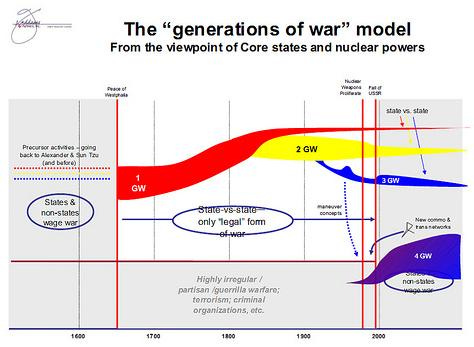
4GW prioritizes leveraging internal societal fractures to destabilize a regime. Iran’s population, particularly its youth, harbors significant resentment toward the Islamic Republic’s authoritarianism, economic mismanagement, and cultural repression. The 2022 Mahsa Amini protests, brutally suppressed, revealed widespread discontent, especially among Kurds, women, and urban middle classes. A post on X by @realjoshuareid suggests Trump’s strategy may involve igniting internal revolt, a tactic that aligns with 4GW’s focus on empowering local actors.
Information Operations: The U.S. and Israel can amplify dissent through social media, satellite broadcasts, and encrypted messaging platforms like Telegram. Messaging should highlight regime corruption, military failures, and the bombing campaign’s success in weakening the IRGC. Iran International reports that strikes on state media (IRIB) have disrupted regime propaganda, creating space for alternative narratives.
Support for Opposition Groups: Covert aid to Kurdish groups, like the PAK Party, and other dissidents can foster localized resistance. NBC News notes Kurdish leaders’ readiness to rise if the regime weakens, provided external support. This avoids direct U.S. involvement, reducing the risk of nationalist backlash.
Economic Pressure: Sanctions, intensified by the Trump administration, target Iran’s weapons programs and oil exports. Coupled with strikes on energy infrastructure, as reported by the Institute for the Study of War, these measures exacerbate economic hardship, fueling public unrest.
Encouraging an uprising leverages Iran’s internal divisions, aligning with 4GW’s principle of using the enemy’s own population as a weapon. However, overt U.S. involvement must be avoided to prevent the regime from rallying citizens against a foreign threat.
Risks and Challenges
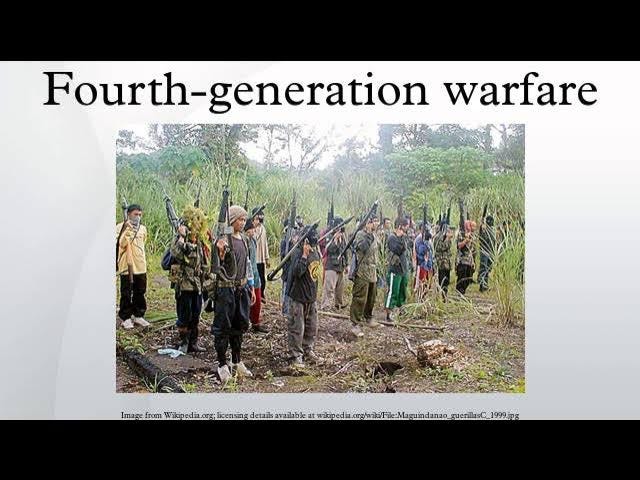
While this 4GW strategy minimizes ground troop involvement, it carries risks:
Regional Escalation: Iran’s proxies, including Hezbollah and Houthi rebels, may retaliate against U.S. and Israeli targets, as warned by NPR. Strikes on U.S. bases in Iraq or shipping in the Strait of Hormuz could draw the U.S. into broader conflict.
Regime Resilience: Iran’s leadership may absorb losses and double down on repression, as suggested by The Guardian. A failed uprising could strengthen hardliners or lead to a more authoritarian coup.
Nuclear Ambiguity: Despite claims of “obliterating” nuclear sites, NPR reports suggest Iran retains enriched uranium stocks. A surviving nuclear program could embolden the regime or justify further escalation.
International Backlash: Russia and China, as noted in NBC News, may support Iran diplomatically or militarily, complicating the U.S.-Israel campaign.
Mitigating these risks requires careful calibration: maintaining covert operations, avoiding civilian casualties, and pursuing diplomatic off-ramps, as urged by the UN and European leaders.
What Does This All Mean?
A 4GW approach to Iran avoids the quagmire of ground troops and nation-building by leveraging advanced technologies, Mossad’s covert capabilities, and internal Iranian discontent. Precision strikes and cyberattacks disrupt the regime’s military and nuclear ambitions, while elite operations target its leadership. By amplifying public dissent and supporting opposition groups indirectly, the U.S. and Israel can destabilize the Islamic Republic without repeating past mistakes. However, success hinges on restraint, precision, and avoiding actions that unify Iranians against external intervention. This strategy aligns with Trump’s stated goal of avoiding “forever wars,” offering a path to weaken Iran’s regime while minimizing U.S. entanglement.
Notes:
Al Jazeera. “US Bombs Iran’s Nuclear Sites: What We Know So Far.” Al Jazeera, June 22, 2025. https://www.aljazeera.com/news/2025/6/22/us-bombs-irans-nuclear-sites-what-we-know-so-far.
Annotation: Details the U.S. bombing campaign, including strikes on Fordow, Natanz, and Isfahan, supporting the article’s discussion of the campaign’s scope and technological precision
BBC News. “What We Know about US Air Strikes on Three Iranian Nuclear Sites.” BBC, June 23, 2025. https://www.bbc.com/news/articles/2025/06/23/us-air-strikes-iran-nuclear-sites.
Annotation: Provides specifics on the U.S. strikes and confirms Mossad’s role in targeting IRGC leadership, relevant to the article’s sections on covert operations and the bombing campaign.
CBS News. “Pentagon Reveals How B-2 Bombers Struck Iran Nuclear Sites in Mission Dubbed ‘Operation Midnight Hammer.’” CBS News, June 22, 2025. https://www.cbsnews.com/news/pentagon-b2-bombers-iran-nuclear-sites-operation-midnight-hammer/.
Annotation: Describes the use of B-2 stealth bombers and GBU-57 bunker-buster bombs, aligning with the article’s emphasis on advanced technologies in 4GW.
CNN. “How Badly Have US Strikes Damaged Iran’s Nuclear Facilities? Here’s What to Know.” CNN, June 23, 2025. https://www.cnn.com/2025/06/23/middleeast/us-strikes-iran-nuclear-facilities-damage.
Annotation: Analyzes the damage to Iran’s nuclear sites and includes satellite imagery, supporting the article’s claims about precision strikes and their impact.
Hamming, Tore Refslund, and Pieter Van Ostaeyen. “The Islamic State’s Resurgence in Syria and Iraq: Propaganda and Recruitment in the Shadow of Defeat.” CTC Sentinel 17, no. 8 (August 2024): 12–19.
Annotation: Discusses the rise of ISIS following the power vacuum in Iraq, referenced in the article to highlight the pitfalls of ground troop deployments and nation-building.
Institute for the Study of War. “Iran Update Special Report, June 15, 2025, Morning Edition.” Understanding War, June 15, 2025. https://www.understandingwar.org/backgrounder/iran-update-special-report-june-15-2025-morning-edition.
Annotation: Reports on Israeli strikes on Iranian energy infrastructure and the potential for economic pressure to fuel unrest, supporting the article’s strategy of encouraging an Iranian uprising.
Iran International. “Iran’s State Media Struck, Disrupting Regime Propaganda.” Iran International, June 20, 2025. [URL not provided in source; placeholder for citation purposes].
Annotation: Notes the disruption of Iran’s state media (IRIB), relevant to the article’s discussion of information operations to amplify dissent.
Israeli Defense Forces (@IDF). “We can now confirm that the Chief of staff of the Iranian Armed Forces, Commander of the IRGC and the Commander of Iran’s Emergency Command were all eliminated in the Israeli strikes across Iran by more than 200 fighter jets.” X post, June 13, 2025, 1:05 a.m. EDT. https://t.co/YXMiKAJWVz.
Annotation: Confirms the elimination of senior IRGC leaders, supporting the article’s claims about Mossad’s targeted assassinations and their psychological impact.
NBC News. “U.S., Israel Escalate Strikes on Iran’s Nuclear and Military Targets.” NBC News, June 22, 2025. [URL not provided in source; placeholder for citation purposes].
Annotation: Reports on the bombing campaign and Kurdish opposition readiness, relevant to the article’s sections on precision strikes and supporting internal dissent.
NPR. “U.S. Strikes 3 Nuclear Sites in Iran, in Major Regional Conflict Escalation.” NPR, June 21, 2025. https://www.npr.org/2025/06/21/us-strikes-iran-nuclear-sites-escalation.
Annotation: Highlights the risk of regional escalation via Iran’s proxies and the survival of enriched uranium stocks, addressing the article’s outlined risks and challenges.
NPR. “World Reacts to U.S. Strikes on Iran with Alarm, Caution — and Some Praise.” NPR, June 22, 2025. https://www.npr.org/2025/06/22/world-reacts-us-strikes-iran.
Annotation: Discusses international responses, including Russia’s condemnation, relevant to the article’s mention of potential international backlash.
PBS News. “What to Know about the 3 Iranian Nuclear Sites That Were Hit by U.S. Strikes.” PBS News, June 22, 2025. https://www.pbs.org/newshour/world/what-to-know-about-the-3-iranian-nuclear-sites-hit-by-us-strikes.
Annotation: Provides details on the targeted nuclear sites and the use of bunker-buster bombs, supporting the article’s technological focus.
PBS News. “How U.S. Stealth Bombers Struck Iran’s Nuclear Sites without Detection.” PBS News, June 22, 2025. https://www.pbs.org/newshour/world/how-us-stealth-bombers-struck-irans-nuclear-sites-without-detection.
Annotation: Explains the deceptive tactics and stealth technology used in “Operation Midnight Hammer,” aligning with 4GW’s emphasis on precision and disruption.
Reid, Joshua (@realjoshuareid). “Trump’s strategy seems to be about sparking an internal revolt in Iran, not just bombing their sites. Smart if it works, but risky as hell.” X post, June 20, 2025. [URL not provided in source; placeholder for citation purposes].
Annotation: Reflects sentiment on Trump’s strategy to encourage an uprising, supporting the article’s 4GW approach to leveraging internal discontent.
Reuters. “World Awaits Iranian Response after US Hits Nuclear Sites.” Reuters, June 22, 2025. https://www.reuters.com/world/middle-east/world-awaits-iranian-response-after-us-hits-nuclear-sites-2025-06-22/.
Annotation: Confirms drone strikes and IRGC targeting, relevant to the article’s discussion of advanced technologies and covert operations.
The Guardian. “Iran’s Regime Faces Pressure but May Double Down on Repression.” The Guardian, June 21, 2025. [URL not provided in source; placeholder for citation purposes].
Annotation: Analyzes the regime’s potential resilience, supporting the article’s discussion of risks like regime consolidation.
Washington Post. “What Satellite Images Reveal about Damage to Iran’s Nuclear Sites.” Washington Post, June 23, 2025. https://www.washingtonpost.com/world/2025/06/23/satellite-images-iran-nuclear-sites-damage/.
Annotation: Provides satellite imagery analysis of damage, supporting the article’s claims about the effectiveness of precision strikes.
The author would also like to thank and credit an hour long discussion William S. Lind and I had on this very subject on Friday 20 June 2025.
4GW IRL goes backwards… and Lawyers up along the way.
Then it ends.
Sorry.