Analysis: Why the U.S. Army’s Marksmanship Training Still Misses the Mark, Even with the Infantry Master Trainer Strategy
Fix It Through Mission Command, Maneuver Warfare, and a 3rd Generation Warfare Culture. Thanks to Dan Wilcox, Emil Praslick, Blaise Cornell-d’Echert Jr., Nathan Cragg and Ted Kennedy for comments.

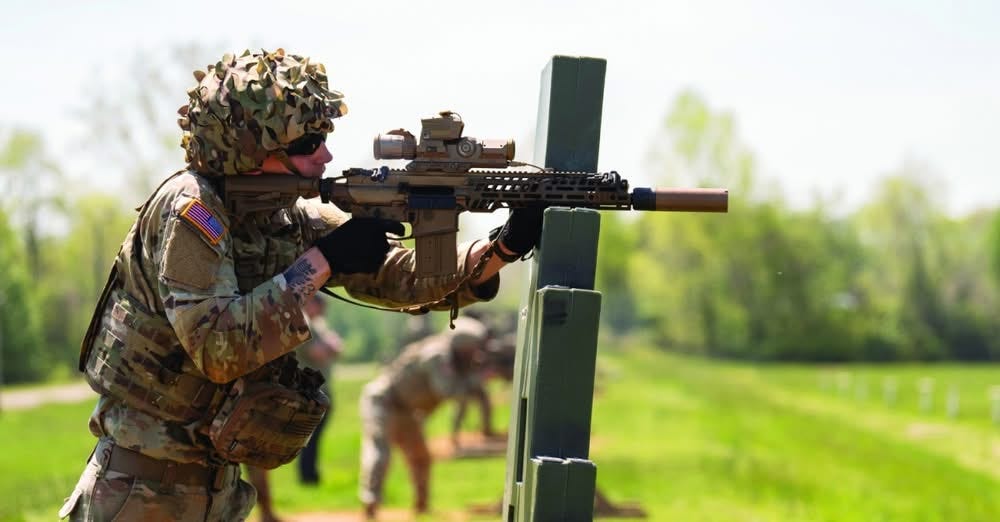
The recent Infantry Master Trainer Strategy (IMTS), published in September 2025, represents another sincere institutional effort to move beyond pure qualification tables toward producing “formation-based master trainers” who can design, execute, and assess realistic unit training plans (UTPs) at squad, platoon, and higher echelons. It rightly replaces fragmented legacy programs (Marksmanship Master Trainer Course, Heavy Weapons Leader Course, and Stryker Master Gunner Course) with a progressive pipeline for Career Management Field (CMF) 11 E5–E7 Non-commissioned officers (NCOs), synchronized with the Advanced Leaders Course, emphasizing not just technical weapons mastery but the ability to translate that knowledge into executable, measurable collective training including capstone live-fire events.
In concept, this addresses real gaps identified in prior programs: wrong student populations (often non-infantry), curricula heavy on technique but light on training design and Unit Training Plan (UTP) development, and graduates who rarely returned to or could influence Forces Command (FORSCOM) units. The goal is to create NCOs who serve as subject-matter experts capable of elevating entire formations’ lethality and marksmanship. This aligns superficially with the needs of modern infantry.
Yet, as the accompanying professional discussion thread powerfully illustrates, this risks becoming another iteration of the same cycle. Emil Praslick, who wrote and staffed a previous Program of Instruction (POI) that gained Training and Doctrine Command (TRADOC) approval and appeared on Army Training Requirements and Resources System (ATRRS) only to see little transformation in practice, captures the frustration:
“Shit like this… should have been transformative. But here we are, mainly doing the same old shit.” Blaise Cornell-d’Echert Jr. describes the endless loop “create a school, units don’t send the right people or can’t sustain influence upon return due to rotation, bring training to units or whole formations to CTCs (but only annually and crowded with other priorities), integrate into every school but can’t lengthen courses or overcome “topics du jour,” and eventually circle back.”
Dan Wilcox notes the absence of a true community of practice with authority adjacent to the chain of command, akin to jumpmasters over airborne operations. The Army remains the only service without something comparable for this critical warfighting function.
The root cause is not a shortage of good ideas, POIs, or dedicated experts. It is the Individual Replacement System (IRS). The IRS is the Army’s persistent personnel model of individual assignments, promotions, and rotations. It systematically undermines unit cohesion, institutional memory, and the long-term cultivation of collective skill. But the US Army and Marine Corps worships it despite mountains of evidence of the negative impacts on unit readiness for combat. Ironically, it was derived from the assembly line process developed by Frederick Taylor in the late 1800s and used successful by Henry Ford in the early 1900s and implemented by the US Army in World War I and in every war thereafter today.
Combined with a deeply ingrained qualification-over-capability culture and the absence of empowered communities of practice, even well-designed initiatives like IMTS will produce new names on slides and updated ATRRS entries without changing substantive outcomes on the range or battlefield.
The IRS as the Silent Saboteur of Marksmanship Excellence
Historical and analytical evidence is overwhelming: the IRS has repeatedly failed to produce or sustain cohesive tactical units capable of the complex, adaptive performance modern marksmanship and live-fire training demand. During World War II, Korea, and later conflicts, individual replacements arrived demoralized, out of condition, and without shared experience, eroding unit effectiveness despite the resilience of many formations.
Post-war analyses and attempts at unit manning or COHORT-style stabilization repeatedly foundered on the rock of the individual-centric personnel bureaucracy managed by Human Resources Command — promotions, assignments, and career timelines optimized for the individual, not the team.
In today’s context, this manifests directly in marksmanship and live-fire training:
Constant churn (soldiers and leaders PCS every 1–3 years, often mid-training cycle) prevents the development of shared mental models, implicit communication, and trust required for effective team and squad live fires.
Master trainer graduates return to units where the chain of command may rotate before any program can be institutionalized; the next priority or “topic du jour” displaces sustained emphasis.
Evaluation and incentives reward “near total qualification” rates — a binary pass/fail checkbox — over maximized combat capability, adaptability under stress, or demonstrated performance in realistic tactical scenarios. As one commenter noted, why should an infantryman be held only to the same baseline as a clerk when the former’s skill directly enables maneuver and survival?
Live-fire events become isolated annual or semi-annual events rather than progressive, embedded components of unit Mission Essential Task List (METL), because stable teams and long-term training programs cannot form. While essential for unit proficiency, because of their infrequency, they are less effective because of the risk aversion and zero defects applied during the event in order for commanders (officers) and leaders (NCOs) to succeed.
Without stable formations, even the best technical training or master instructors cannot build the collective competence that turns individual marksmen into lethal, adaptive teams. The IRS ensures we change the names on the PowerPoint but never the substance.
How Marksmanship and Live Fires Should Be Conducted: Grounded in Mission Command and Maneuver Warfare
A 3rd Generation Warfare (3GW) culture — professional, cohesive small units executing Auftragstaktik (mission-type orders) with initiative, trust, and shared understanding — provides the foundation. This culture must also generate the adaptability, discrimination, and precision required for 4th Generation Warfare (4GW) environments (hybrid threats, irregular actors, information battles, complex urban/human terrain, and ROE challenges).
Marksmanship is not an end in itself or a standalone “skill qualifier”; it is an enabler of rapid OODA loops (Observe-Orient-Decide-Act) at the individual, team, and small-unit level within the larger tactical framework of maneuver.
Core principles for redesign:
Outcomes-Based, Not Process- or Qualification-Based. Focus on demonstrated results: Can the soldier/team deliver accurate, timely, discriminatory fire under stress, fatigue, limited visibility, and uncertainty while supporting or conducting maneuver? Can they integrate with other systems, communicate implicitly, and adapt when the plan changes? Qualification tables remain a necessary baseline but must never be the primary measure of effectiveness.
Progressive, Integrated Live Fires as the Heart of Training. Move beyond isolated known-distance or table-based events. Build from individual and buddy-team basics through fire-team, squad, and platoon live fires that embed marksmanship within tactical scenarios: bounding overwatch, suppressive fire to enable movement, target prioritization under time pressure, shoot/no-shoot decisions, integration with indirect fires or supporting arms, and transitions between cover and movement. Use force-on-force elements (Multiple Integration Laser Engagement System (MILES) 2, Simulations Munitions or Simulation Network (SIMNET) equivalent) and free-play OPFOR wherever safety and resources allow, so units practice adaptation rather than scripted responses.
Decentralized Execution Under Commander’s Intent (Mission Command). Platoon leaders, platoon sergeants, and squad leaders own their marksmanship and live-fire programs. Master trainers serve as coaches, mentors, and quality-control experts — not sole executors. Training plans flow from unit METL and commander’s intent; execution is bottom-up and adaptive. Rigorous, candid After-Action Reviews (AARs) focus on learning and adaptation, explicitly linking performance back to OODA Loop dynamics and Mission Command tenets (shared understanding, commander’s intent, mission orders, disciplined initiative, and risk acceptance).
Stress Inoculation and 4GW Realism. Incorporate realistic stressors: night operations, limited ammunition, Mission Oriented Protective Posture (MOPP) or degraded conditions, civilian presence or hybrid injects (media, information effects, irregular threats), and Rules of Engagement (ROE) dilemmas. This builds the discrimination and precision needed to win both the firefight and the narrative in 4GW environments, while preserving the aggressive, initiative-driven ethos of 3GW maneuver.
Technology as Enabler, Not Replacement. Simulators and virtual systems provide high-volume, low-cost repetitions for fundamentals and decision-making. Live fire validates, stresses, and cements the skills under conditions simulators cannot fully replicate. The balance must favor live training for collective events.
This approach directly supports Maneuver Warfare by treating accurate, adaptive fire as one element of creating and exploiting temporary windows of advantage through speed, surprise, and combined arms — all executed by cohesive teams that trust each other and their leaders because they have trained realistically together over time.
Recommendations for Implementation
Address the IRS Root Cause. Pilot and expand unit manning or multi-year stabilization policies for infantry and maneuver formations (building on historical analyses and prior experiments). Longer home-station training cycles with stable personnel are prerequisites for any meaningful collective marksmanship or live-fire program. Without this, IMTS and similar efforts will continue to produce capable individuals who cannot sustain excellence in rotating units.
Create a Genuine Marksmanship Community of Practice with Authority. Model it on the jumpmaster system or aspects of the USMC Infantry Weapons Officer (Gunner) warrant track, but integrate it better. Establish certification standards, inspection authority, and influence over unit programs that sits adjacent to (not fully subordinate to) the daily chain of command. This prevents “same old stuff” reversion when leaders rotate. Combine deep-expertise warrant officers (for proponent-level doctrine, advanced systems, and career retention beyond typical retirement windows) with embedded master trainers in every infantry battalion and brigade — NCOs and officers who serve extended tours in training roles with career incentives (promotion credit, special qualification pay, or a functional area track that rewards both training expertise and return to line leadership).
Fully Empower and Resource IMTS Graduates — and Go Further. The strategy’s emphasis on UTP development and capstone live-fire planning/execution is sound. Ensure graduates return to the right units (CMF 11 priority) and are positioned to influence training immediately. Expand the model beyond infantry to other branches with direct-fire systems. Make master trainer certification a valued career milestone, not a detour.
Redesign Evaluation and Incentives. Replace or heavily supplement qualification-rate metrics with unit-level performance in complex live-fire exercises (home station or CTC). Reward demonstrated capability, adaptability, and training design skill. Tie this to broader Outcomes-Based Learning (OBL) reforms in Professional Military Education and unit training.
Integrate Marksmanship into a Broader 3GW/4GW-Ready Culture. Make realistic, progressive live fire a continuous thread through METL, FTXs, and leader development — not an annual event. Incorporate OODA Loop thinking explicitly into AARs and coaching. Build the implicit communication and trust that allows small units to operate effectively in chaos, whether in conventional maneuver or hybrid 4GW scenarios.
Pilot, Measure, and Scale — With Combat Applications Training-Course (CATC) 2.0 Thinking. Test enhanced approaches (stabilized units + empowered master trainers + outcomes-focused live fire) in select formations. Measure what actually matters: not just qual pass rates, but performance under realistic conditions, retention of expertise, and adaptability. Concepts like an evolved CATC 2.0(taught successfully by the Asymmetric Warfare Group (AWG) in the late 2010s, and early 2020s. This builds a stronger community or center of gravity for these capabilities. It deserves exploration to break the cycle Blaise Cornell-d’Echert described.
Conclusion
The Infantry Master Trainer Strategy is a step in the right direction, confronting the lack of formation-based expertise in the NCO Corps. But without parallel reform of the Individual Replacement System and the creation of a true community of practice with authority, it will join prior well-intentioned efforts in producing limited, temporary gains rather than lasting transformation. We will continue to worship at the altar of qualification while the substance of cohesive, adaptive, lethal small-unit performance remains elusive.
A 3rd Generation Warfare culture is built on trust, initiative, cohesion, and rigorous realistic training. It remains the essential foundation. Only from that base can the Army develop the adaptability needed to win in 4GW environments. Marksmanship and live-fire training, properly conceived and executed under Mission Command principles, are not ancillary tasks; they are core to developing the decentralized competence and rapid OODA cycling that Maneuver Warfare demands.
The expertise and ideas exist in the POIs that were written and approved, in the comments of those who have lived the frustration, and in the historical record of what cohesive units can achieve. What has been missing is the willingness to confront the personnel system and cultural barriers that prevent those ideas from taking root. Until we do, we will keep having the same conversation, with new course names.
Endnotes:
Maj. Richard Chandler, “The Infantry Master Trainer Strategy: Transforming Marksmen into Master Trainers,” U.S. Army, September 3, 2025, https://www.army.mil/article/287898/the_infantry_master_trainer_strategy_transforming_marksmen_into_master_trainers.
Donald E. Vandergriff, Path to Victory: America’s Army and the Evolution in Human Affairs, 2nd Edition (Charleston, SC: Amazon Self Publishing, June 2013).
CETS Alford, The Army Unit Manning System: In Pursuit of Irreversible Momentum (Arlington, VA: Association of the United States Army, 2003), https://www.ausa.org/sites/default/files/SR-2003-The-Army-Unit-Manning-System-In-Pursuit-of-Irreversible-Momentum.pdf.
Pat Towell, Forging the Sword: Unit-Manning in the US Army (Washington, DC: Center for Strategic and Budgetary Assessments, 2004), https://www.comw.org/qdr/fulltext/0410towell.pdf.
WS Knightly, The United States Army Wartime Replacement System (DTIC, 1986), https://apps.dtic.mil/sti/tr/pdf/ADA179218.pdf.
EW Klinek, “The United States Army Replacement System in the European Theater of Operations, 1944–1945” (Temple University thesis, 2014), https://scholarshare.temple.edu/server/api/core/bitstreams/ffe86e37-52ed-4c04-8d1d-42e764e189e8/content.
Donald E. Vandergriff, Adapting Mission Command: Creating Leaders for a Superior Command Culture, (Annapolis, MD: Naval Institute Press, SEP 2019). This book emphasis Outcomes Based Learning (OBL) the predecessor to Outcomes Based Training and Learning or OBT&E.
Donald E. Vandergriff, The Outcomes Based Learning (OBL) Professional Handbook, Creating Leaders and Units for Future Combat, (Reston, VA: Special Tactics University, DEC 2022).
Special Tactics Institute, “CAT-C Marksmanship: The Origins of Outcomes Based Learning”, (Reston, VA: Special Tactics Institute, DEC 2022), also at https://www.specialtactics.me/blog/2021/10/9/outcomes-based-learning
U.S. Department of the Army, ADP 6-0, Mission Command: Command and Control of Army Forces (Washington, DC: Headquarters, Department of the Army, 2019),
https://armypubs.army.mil/
Additional insights drawn from the professional discussion thread on Dan Wilcox’s Facebook post regarding the IMTS article, including commentary by Emil Praslick, Blaise Cornell-d’Echert Jr., Nathan Cragg, Ted Kennedy, and others (context provided in query). I know the professionalism of several of these individuals having served or was a contractor with them for several years from 2007 to 2012 while the author worked with Army Capabilities Integration Center-Forward, as well as with the Asymmetric Warfare Group or AWG. Many of these thoughts are also contributed to the writings and thoughts of COL Casey Haskins, US Army retired, and former Director of Military Instruction or DMI at the US Military Academy West Point, NY.
This analysis draws on decades of study and advocacy for adaptive leadership, Mission Command, Maneuver Warfare, and personnel system reform. I attended the AWG CAT-C course at Fort Jackson in October 2007, and I found it the best marksmanship course I had ever attended. Also, my hobbies also include combat pistol shooting and marksmanship training. I shot everything from magazine fed pistols and revolvers to various calibers of shotguns, rifles and carbines. The principles are timeless; the urgency is current.
The marksmanship crisis is not about rifles or optics. It is a leadership and culture problem. We have built a system that rewards qualification over proficiency, and compliance over competence. Until we reform how we develop leaders, better equipment alone will not make us more effective.
"Model it on the jump-master system or aspects of the USMC Infantry Weapons Officer (Gunner) warrant track, but integrate it better."
I love this idea, Don.
A 110A Warrant Officer MOS for the Infantry Branch would institutionally fix some of the individual skill driver problems the Army has.
Also, professional and competitive shooters know the magic of disciplined dry fire to master weapons skills. Expand its use to all infantry formations. This also shuts down the bean counters who complain about ammunition costs.
BTW, Ranger Regiment does all of this already (excepting the Infantry Warrant), Big Army just has to ask them for help.